Partner guest post: 4 best practices for driving modern museum revenue growth
Discover the top strategies to drive museum revenue beyond ticket sales by enhancing visitor experiences, optimizing retail, and leveraging modern tech
Cultural institutions face a constant tug-of-war between preserving their educational missions and maintaining sustainable financial health. Providing a memorable in-gallery experience is your most powerful revenue driver. When visitors feel genuinely connected to your collection, they come back, they join, and they give. Creating value that persists after they leave deepens that loyalty further.
By implementing accessible, digital-first strategies, organizations can establish a more reliable funding ecosystem. Refining admissions workflows and monetizing secondary spaces, such as retail shops, allows museums to deepen visitor engagement while generating vital income.
Optimize museum admissions
Your museum’s first touchpoint with guests sets the tone for their entire relationship with your institution, and often that touchpoint is online. Whether a potential visitor is looking up exhibits on your website or booking tickets to visit your museum, you have the opportunity to create a great first impression and maximize your revenue.
Here are a few things to keep in mind as you’re optimizing your digital admission experience:
- Collect data intentionally. Asking guests about their contact information, communication preferences, and interests allows you to tailor future messaging to resonate. Just avoid asking for unnecessary information that may drive them to abandon the online purchase.
- Offer visit add-ons upfront. In the ticket checkout process, allow guests to select additional experiences or services, such as parking, a behind-the-scenes tour, an IMAX film, or other unique experiences. Visitors will appreciate the convenience of booking in advance, and it also boosts awareness of these additional revenue streams.
- Share directions and tips for the visit. While this may initially not seem like a revenue-driving activity, guest experience initiatives like these that communicate the logistics of a visit do support your institution’s financial health. Satisfied visitors will be more likely to return and recommend your museum. Plus, if you include a map of your facilities, you can highlight the location of your cafe and gift shop and direct more visitors there.
- Enable mobile wallet integrations. When visitors add their tickets and/or membership cards to their mobile wallets, it’s easier for them to find, and it streamlines admissions. Guests move quickly through the checkpoint, allowing you to support higher visitor capacity.
- Introduce membership early. Even before their scheduled visit, you can promote membership benefits at checkout and in the follow-up confirmation email. Your museum can even offer a deal that lets guests convert their day ticket into a membership, reducing the annual fee by the ticket price.
While you’re updating your digital ticketing system, ensure it supports timed entry and dynamic pricing. This allows you to allocate capacity appropriately and respond to market demand.
Expand the visitor and member experience
The modern museum experience should resonate long after the visitor has left your physical building.
You can extend the museum experience for your visitors by offering:
- Post-visit curator-led podcasts or video essays that deepen what visitors saw onsite
- Online talks, Q&As, or panels tied to a current exhibition
- Links to exhibition-related merchandise in your online store
- Member-only updates, acquisition news, conservation stories, or early access announcements
- Take a self-guided tour of a space
- Digital access to collections in storage
You may already have some of this content created, so it’s just about placing it appropriately within the visitor or member journey. Depending on the resource, it might work best as a member-exclusive item, a free lead-capture asset to build your email list, or available to anyone for an additional fee or donation.
In your strategy, consider both the revenue potential and the long-term value of deeper engagement with the visitor. For instance, your institution could create paywalled premium content as a membership benefit, like exclusive audio tours unlocked with a member code.
Similar to a sales funnel, your institution wants to move guests from awareness to the commitment of membership, monthly donations, or a major gift. Even if offering a resource for free doesn’t immediately yield revenue, it is likely paving the way for more revenue down the line.
Maximize secondary spending in retail and cafes
Your institution also needs to invest in building a diverse funding strategy, with strong secondary revenue streams. Relying on admission fees alone leaves your museum more vulnerable to seasonal attendance dips and global economic cycles.
Cafes and gift stores have long been common strategies for museums to diversify and boost their revenue. To elevate these profit points to valuable assets within your financial portfolio, ensure your system and practices are up to date by:
- Ensuring popular exhibition-specific merchandise is always in stock with automated low stock alerts and integrated inventory tracking.
- Optimizing the procurement process by creating purchase orders and sending them to vendors in real time directly from your retail management system.
- Syncing your point-of-sale system with your central CRM platform, which will allow you to send personalized communications to visitors that align with their interests.
In addition to the digital sphere, the in-person design of your space can also bolster revenue. Thoughtfully placing retail and cafe spaces near high-traffic exhibit exits encourages natural spending behaviors. Even if you’re featuring a traveling exhibit or unique experience that’s far from the gift shop’s fixed location within your building, you could add a small pop-up booth with tie-in merchandise close to the special display. When a retail environment visually extends the theme of the preceding gallery, visitors feel they are acquiring a meaningful souvenir.
You might also partner with local artisans to feature bespoke merchandise that aligns with your current installations. This supports the regional economy while offering visitors unique items they cannot purchase elsewhere, organically boosting secondary sales.
Encourage generosity with an intentional fundraising strategy
In addition to ticket sales, add-on experiences, and sales from your cafe and retail shops, donations, whether attached to a membership or not, should also be included in your revenue strategy.
While most cultural institutions are nonprofits, museums require unique fundraising tactics to be successful. Given the complex revenue streams and visitor entry points, it’s best to follow a specialized plan designed for museums.
Muse recommends the following fundraising best practices for refining your fundraising:
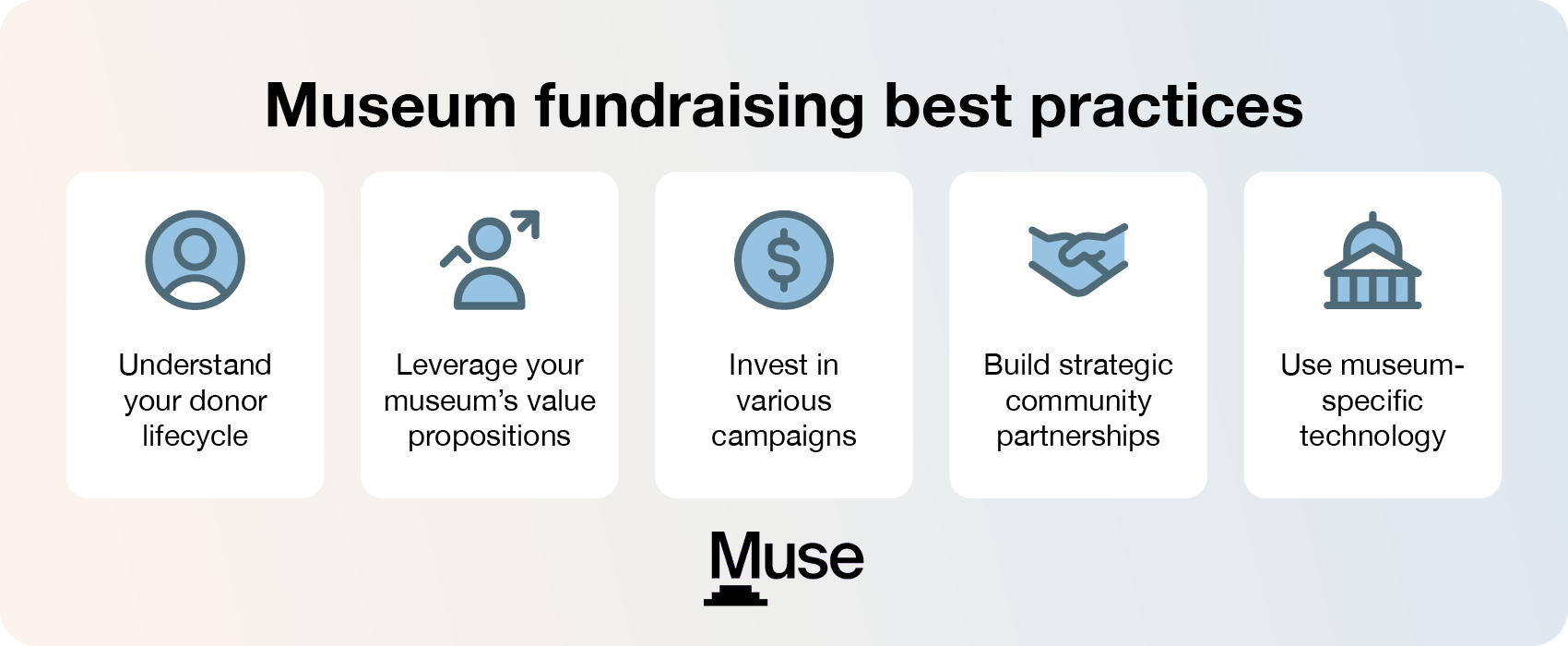
- Understand your donor lifecycle. To capitalize on visitors’ enthusiasm at the right moment, map how your visitors move from acquisition (ticket purchase, newsletter sign-up, etc.) to the final stage of stewardship after they’ve made their donation.
- Leverage your museum’s value propositions. Donor engagement can be rooted in your physical space, collections, and expertise. While donors will receive intrinsic satisfaction from giving, knowing they are supporting a cultural treasure, your museum can also offer tangible benefits, like behind-the-scenes access.
- Create various campaigns and donation options. Your marketing and funding efforts should both take an omnichannel approach. Reach out to potential supporters across various channels and offer multiple giving methods, including non-cash gifts (e.g., stocks, cryptocurrency.
- Build strategic community partnerships. Just as your development team builds relationships with individual donors, invest in your relationships with corporate partners, other community organizations, and local businesses. Creatively brainstorming collaboration opportunities with trusted partners can often introduce new revenue-generation opportunities beyond sponsorships.
- Use museum-specific technology. To avoid siloed data that treats a visitor who donates as two separate entities rather than one passionate individual, select tools that see the entire individual. This will better support your relationship-building efforts with donors, visitors, and members (especially when all three of those labels might apply to one person).
As you implement your fundraising strategy, intentionally select and track metrics. You’ll want to know which communications are driving the most engagement, when the highest likelihood of donor conversion occurs during a visit, and what the average gift size is. These data points will help you hone your plan and increase donations.
To grow your revenue and your institution, you have to start with dialing into the visitor experience. Every moment, from ticket purchase to refueling in the cafe to reading your curated informational placards to the follow-up messages a visitor receives, should be thoughtfully planned out to maximize value and guest engagement. When you center visitors in your strategy, all the rest will pay off.
