
Your collection doesn't end at the gallery wall
How museums can use Extend and Empower to give visitors meaningful access to collection objects beyond what's on display, and how to start lean and build interpretation over time.

Depending on the institution, less than 5% of a permanent collection is on view at any given time. The rest is in storage, in conservation, or in transit. Occasionally something surfaces in a traveling exhibition or a rotating gallery, but for most visitors, most of the collection simply doesn't exist.
That's just how collections work. What's changed is that the practical constraints keeping objects out of view don't have to keep them out of reach. The museums doing the most interesting work right now aren't waiting for a capital campaign to build open storage. They're starting with what they have, and using digital tools to extend the reach of their collection in ways that are meaningful to visitors.
The case for going beyond the label
A wall label does a lot of work in a small amount of space. It tells you what something is, who made it, when, and sometimes why it matters. But it can't tell you what the conservator found when they looked at it under UV light. It can't play the oral history recorded with a community member who recognized the object from their childhood. It can't show you the three other versions of this piece sitting in storage two floors below you.
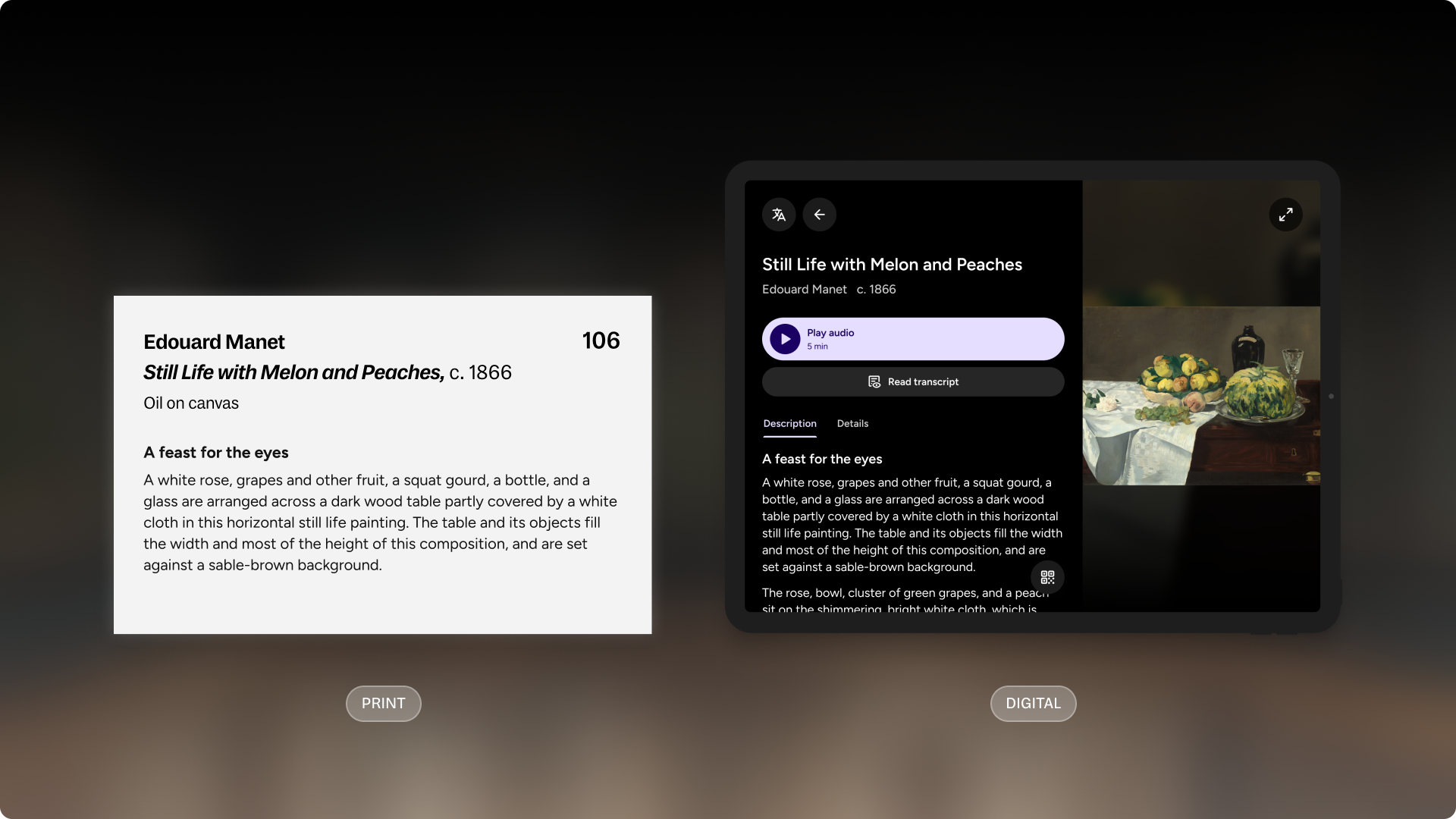
Digital interpretation can do all of those things, and visitors are increasingly expecting it. The question isn't whether to invest in richer object-level content. It's how to do it in a way that's sustainable, scalable, and doesn't require your team to build something from scratch.
Deepening the on-site experience with Empower
Empower is Pladia's visitor guide platform. Built as a Progressive Web App, it runs in the browser rather than as a native app, so visitors don't need to download anything before they arrive.
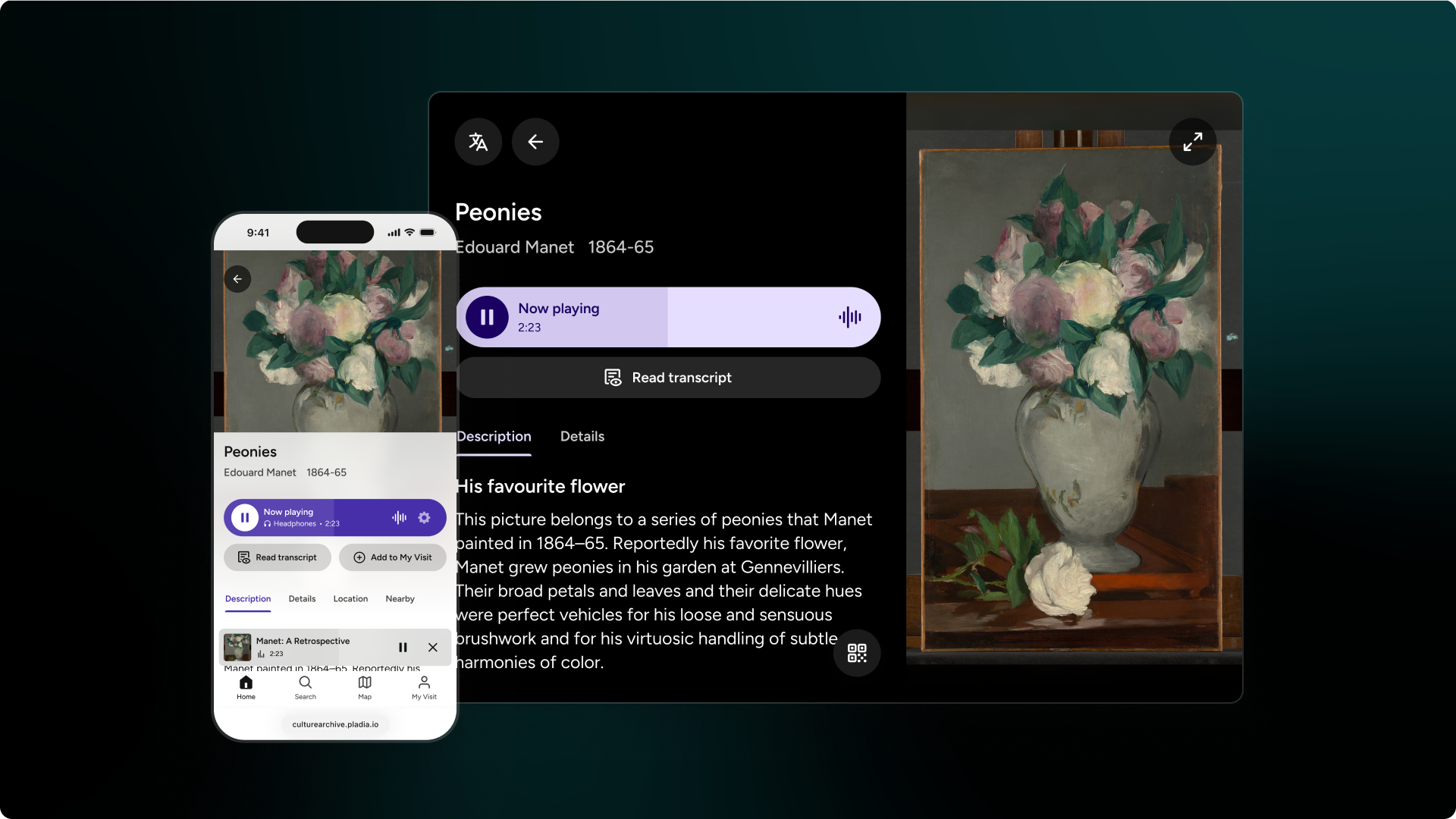
Where a printed label has to stop, Empower keeps going. A visitor standing in front of a painting can tap through thematic threads across collections, read through conservation notes, hear curator commentary, or follow an audio guide available in multiple languages. In busy gallery environments, that matters: rather than straining to hear shared audio or crowding around a single text panel, visitors engage at their own pace, in a format that works best for them.

Opening up the collection with Extend
When an object is in conservation, on loan, or simply part of the collection that hasn't made it into an exhibition, visitors typically encounter an empty case or nothing at all. Pladia's Digital Labels product can be used to surface content for objects that can't speak for themselves on the gallery floor. A digital object label in that space can show before-and-after restoration visuals, explain where the object is and when it returns, or tell the story of why it matters even in its absence.
The same logic applies to objects in storage or archives that may never see a traditional display context. Extend gives institutions a way to make those holdings present in the visitor experience without the infrastructure cost of open storage. It's not a substitute for walking through rows of shelving, it's something different: bringing specific objects, stories, and collection depth into the spaces where visitors already are.
Content can be as simple as extended text and images, or as rich as video and audio. And because Extend works complementary with Empower, a visitor who encounters an object on display through a Digital Label can seamlessly continue exploring it, and the broader collection, from their own device by scanning a QR code to that content with them on their personal device.
Starting lean, building over time
The instinct is often to wait until the content is ready. To hold off on a digital layer until you have video for every object, or audio for every gallery, or a complete collection database with cleaned metadata. That's a reasonable instinct, and it's also the thing that keeps most institutions from starting at all.
The better approach is to start with what's already there. Most museums have rich content sitting in their systems than they realize. Existing catalog records, past exhibition essays, conservation reports, archival photographs. Empower and Extend are designed to ingest and surface that content without requiring you to build something new before you launch.
From there, you build interpretation over time. You identify the objects that generate the most engagement through our real-time analytics and invest in deeper content for those first. You work with your curatorial team to add a layer per quarter rather than trying to do everything at once. You treat your digital layer as a living document, the same way you'd treat a gallery rotation.

The real value is access
Museums have always been in the business of making things accessible. The objects in storage aren't inaccessible because no one cares about them. They're inaccessible because of practical constraints that digital tools are genuinely well-positioned to address.
Empower and Extend don't solve every problem. They don't replace open storage where it's possible and appropriate, and they don't substitute for the experience of standing in front of an original object. But they do give institutions a way to close the gap between what they hold and what visitors can actually encounter.
Your collection doesn't end at the gallery wall. With the right tools, it doesn't have to feel that way for your visitors either.
Interested in how Pladia's Empower and Extend products could work for your institution? We'd love to show you what's possible, get in touch.
