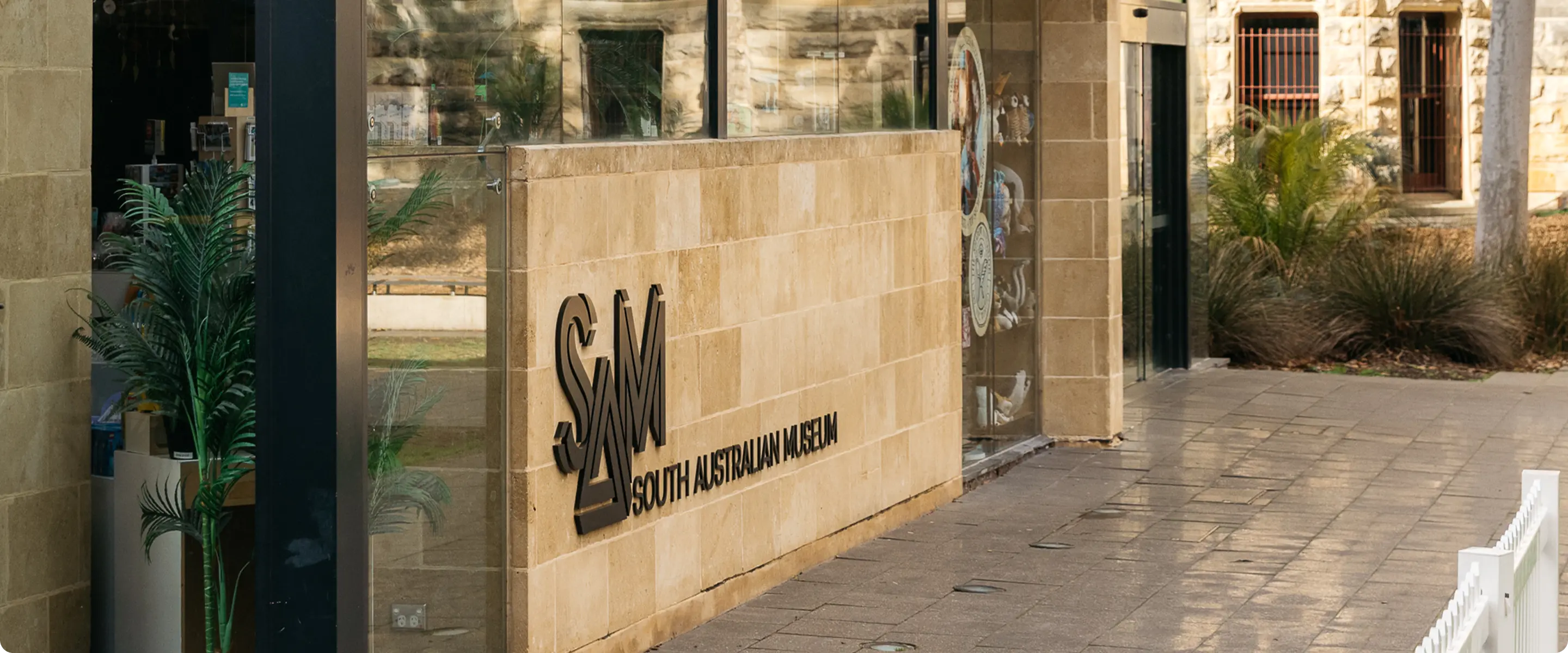
New voices in historic spaces: the South Australian Museum’s digital guide
170 years on, the South Australian Museum is using a digital guide to add new perspectives and improve access without changing its historic building

As they celebrate their 170th anniversary, the South Australian Museum is reworking its visitor journey to make it easier to navigate and explore, in a complex heritage building with galleries that have changed little over time. The Museum has recently launched a Pladia digital guide that helps visitors find their way through the building and discover new perspectives on its collections, as well as what's on across the Museum.
The challenge
The Museum's heritage building displays around 6,000 objects, artefacts and specimens, a fraction of its total collection. The building can feel like a labyrinth to visitors because it offers no simple linear route. The first challenge was to create a clearer, more connected experience that encourages visitors to engage more deeply with the Museum and gives them reasons to return, without losing its distinctive character.
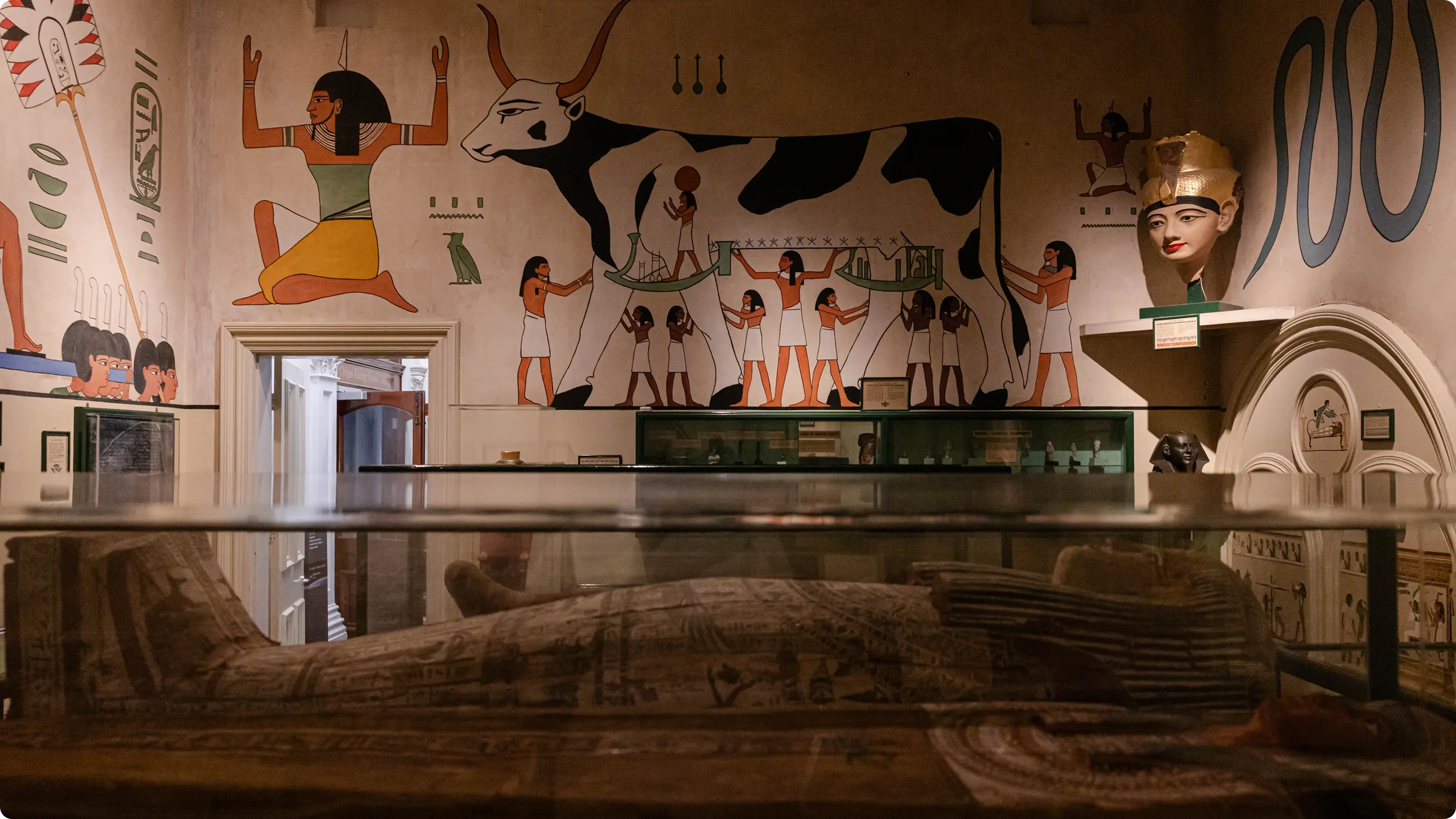
The second challenge was storytelling. Many galleries still reflect the interpretive approach of the era in which they were installed, from the World Mammals Gallery (1972) to the Egyptian Room, a 1939 installation that has remained largely unchanged for more than 85 years.
The solution
A digital guide for new stories and perspectives
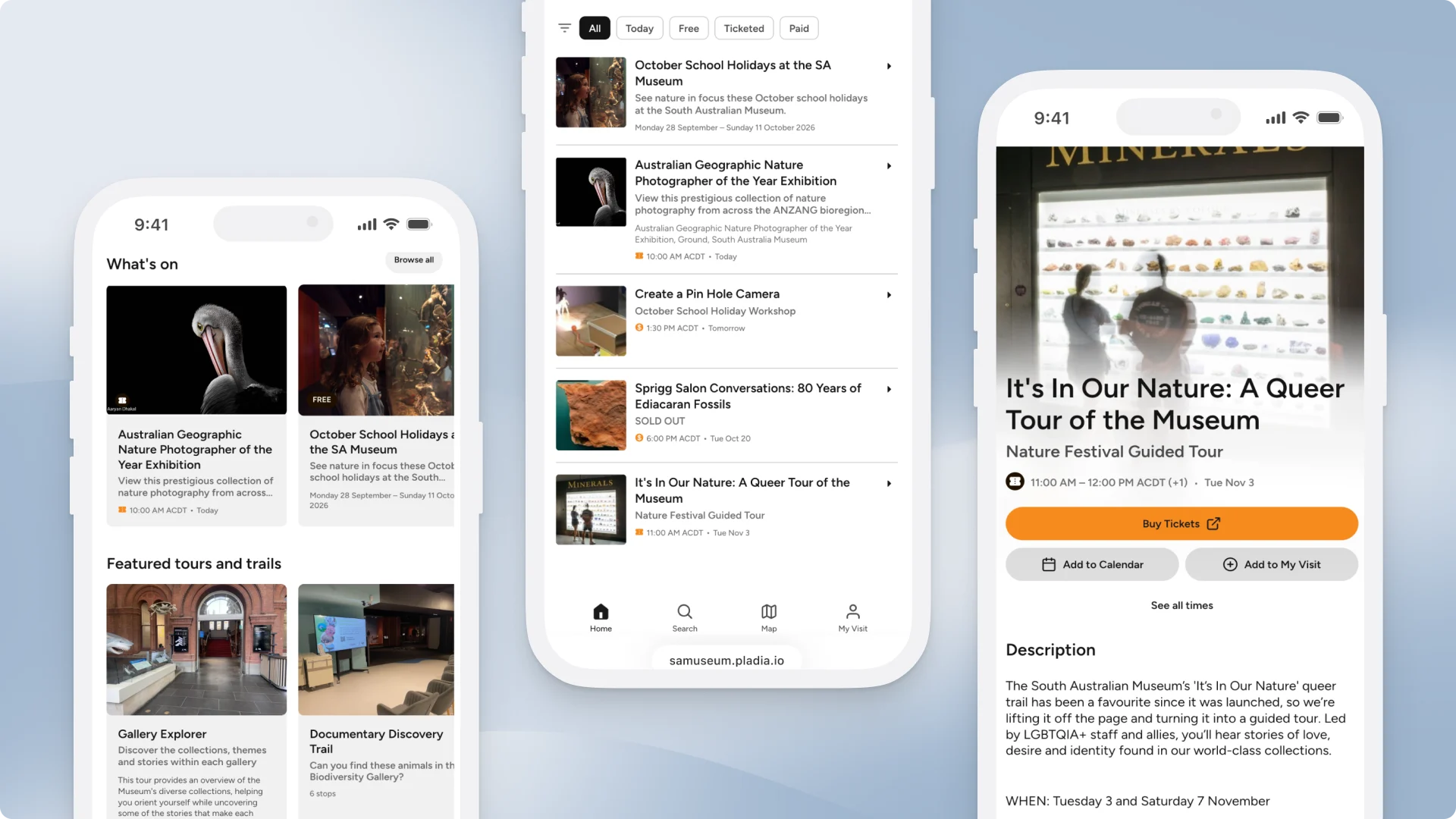
South Australian Museum’s digital guide is a browser-based progressive web app (PWA). Visitors can access it on arrival or use it throughout their visit to explore interactive maps, self-guided audio tours and scheduled events.
"The immense opportunity provided through a digital and complementary engagement layer such as Pladia is that it allows us to make change, add content and test new ideas without directly changing the physical Museum," Brenan explains. "We can create interventions with far greater speed and dynamism than we can through physical changes, gallery redevelopment or signage upgrades."
Brenan Dew, Manager Visitor and Commercial Services, South Australian Museum
The Museum is also careful about where digital fits.
"People often come to museums precisely to slow down, step away from devices and share an experience with family, friends or loved ones … The aim is not to make the digital experience dominant or the only way to experience the Museum, but to make it seamlessly available when it adds value to the visitor."
Outcomes
A guide that keeps growing
The Museum’s digital guide started with an interactive map and content about each of its spaces, extending out into the North Terrace precinct. Since launch, the team has added audio tours, scheduled events, deep dives on key objects, and image recognition.
Contemporary voices across the Museum
One of the first tours to be published is In Our Nature: Queer Trail of the South Australian Museum, which offers a new way to move through the collection. It began as a physical trail, became a podcast during COVID, and now lives on as an audio guide.
"Years of previous programming and engagement initiatives can find new life through this digital platform,"
Brenan Dew
Improving accessibility at the Museum
Pladia's image recognition and audio-described content in the current photography exhibition help visitors find the content they are looking for. Visitors can also get directions through the Museum that suit their accessibility needs.
Making more of the Museum's knowledge accessible
Scientists, collection managers and other specialists will next create audio guides and deeper, potentially paywalled tour content.
"Many of these stories have always existed within the Museum's knowledge, records and expertise, but we have not always had an effective way to make them accessible to visitors … Pladia provides a platform to surface them, introduce contemporary interpretation and different voices, and continually add new layers of meaning around collections that may physically remain unchanged for decades."
Brenan Dew
