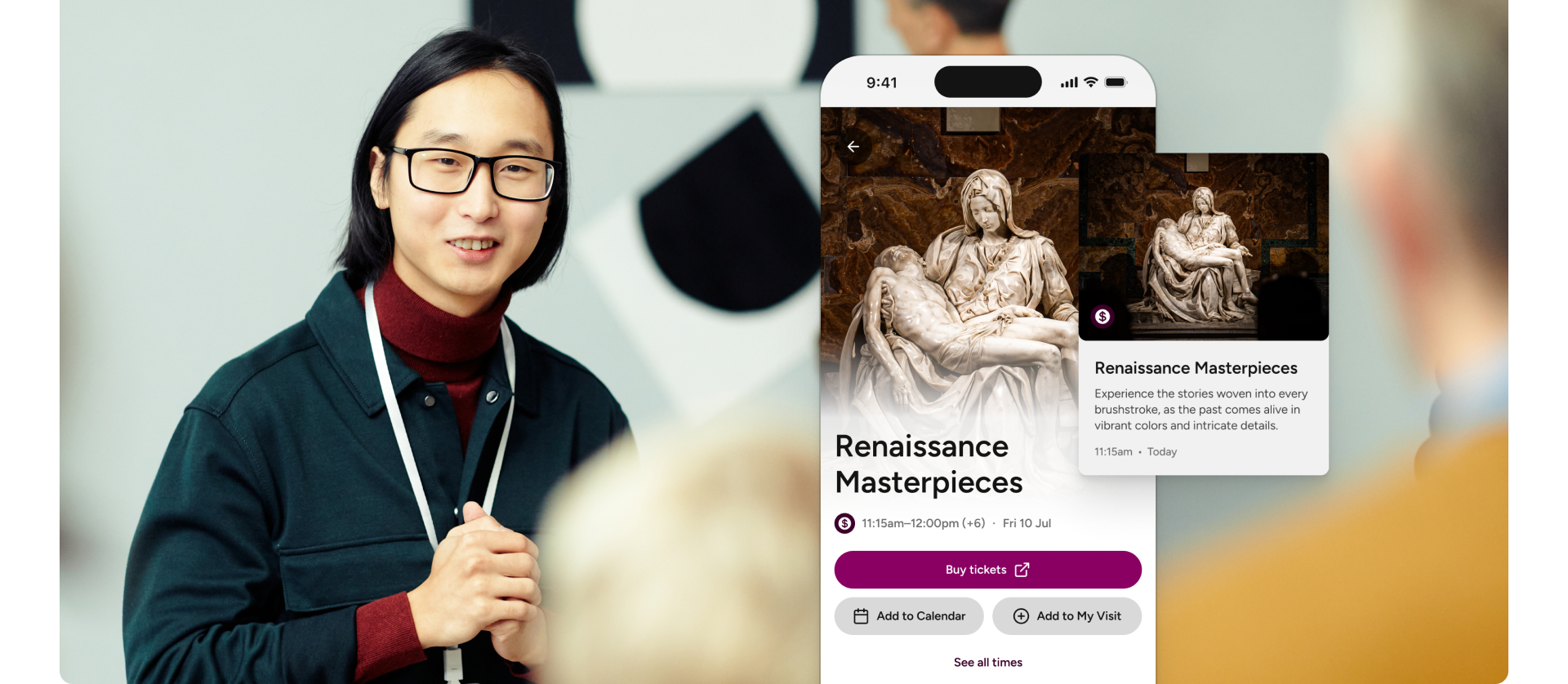
How to help visitors discover museum events on-site
Why guided tours, curator talks, and workshops are often missed, and how digital guides can make them easier to discover

Museums invest heavily in programming, and for good reason. Guided tours, curator talks, workshops, performances, and member events often create some of the most memorable moments of a visit. They add context, spark conversation, and help visitors engage more deeply with collections and exhibitions.
Yet many of these experiences still go unnoticed, not because visitors are uninterested, and not because museums fail to promote them.
Most museums already do a good job of promoting events before a visit. Programming is advertised on museum websites, through newsletters, social media, ticketing platforms, and on-site signage. If someone is planning their visit in advance, there is usually plenty of information available.
As we started thinking about our new Events feature, we kept coming back to the same question: what happens once a visitor is already inside the museum? We think that’s where there’s still an untapped opportunity.
Why visitors miss museum events
A visitor might check today’s schedule on the museum website, glance at a printed guide at the ticket desk, or walk past signage near the entrance. All of that information is technically available, but three hours later, while they’re deep in the galleries, it may as well not exist.
Unlike major exhibitions, guided tours and workshops rarely justify extensive pre-planning, yet they can add enormous value to a visit when discovered at exactly the right moment.
Printed guides and signage were never going to fully solve this. They're static by nature, while visitor movement is dynamic.
Helping visitors decide to attend your event
Helping visitors discover programming is only part of the problem. Once someone notices an event, they still need enough context to decide whether attending is actually possible.
Is it free, or does it require a separate ticket? Is it members only? Do they need to book ahead? Is there still time to get there? Without that context, even interested visitors may hesitate or decide it isn’t worth the effort.
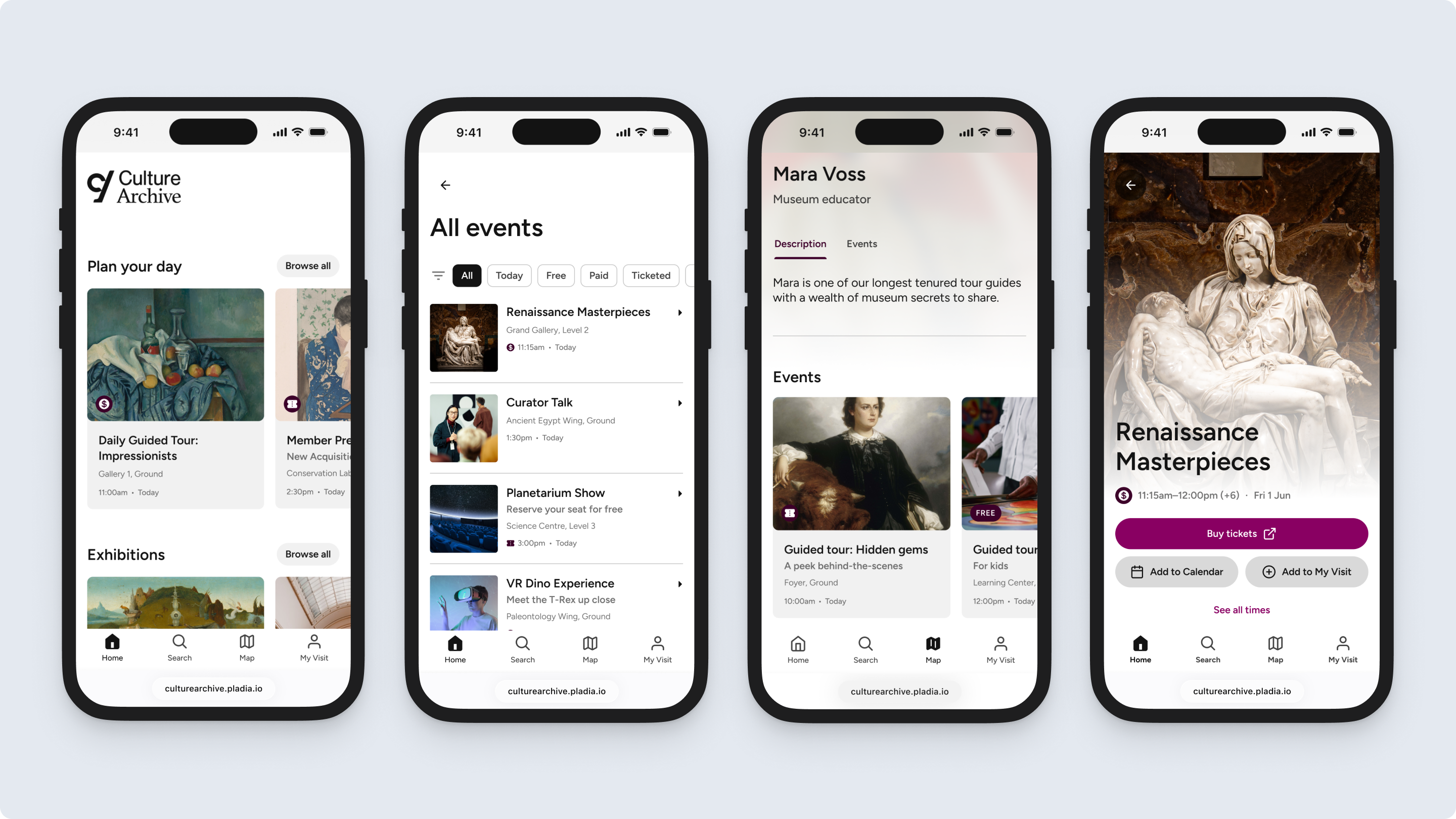
When designing Events for Pladia Empower, we wanted to help visitors take action to attend the event. That meant making admission requirements clear, allowing museums to label experiences as free, paid, ticketed, members-only, or donation-based, so visitors can make quick, confident decisions.
Event information should be time-aware
An exhibition may be relevant for weeks or months, where an event may only be relevant for a very small window of time. This changes how event information should be presented.
Traditional event listings often treat all upcoming events equally, forcing visitors to scan long schedules to figure out what matters right now. But once someone is on-site, relevance becomes highly time-dependent.
Visitors rarely want to browse a month’s worth of events. More often, they want to know what’s happening next, what’s starting soon, and what they still have time to make.
So rather than treating all sessions equally, we order events by time and automatically remove completed sessions from key visitor-facing surfaces, like the homepage. If an event is recurring, we let the visitor know what time it’s on “today”.
That way, visitors always see what’s relevant now, not clutter from events they’ve already missed.
Finding new ways to connect with visitors
We believe many visitors don’t actively look for events. Instead, they discover programming while exploring the spaces, exhibitions, and objects they’re already interested in. This creates an opportunity to surface programming throughout the visitor experience, rather than isolating it in a dedicated “What’s on” page.
A visitor exploring a gallery might discover an upcoming curator talk happening in that same space. Someone engaging deeply with a particular object might uncover a related workshop they otherwise would never have known existed. This kind of contextual discovery creates entirely new pathways into programming.
We also hear consistently from customers that they’re not just trying to increase attendance. They’re trying to build loyal visitors who return regularly and feel part of a community.
A visitor who never intended to browse events may still discover something meaningful because it appears alongside content they’re already engaged with. That single moment of discovery may not only improve today’s visit, it may give them a reason to return next month, attend another program, or become part of an ongoing community around your museum.
How to drive attendance to your events
Good event promotion should help visitors quickly answer five simple questions:
- What’s happening now?
- What’s happening next?
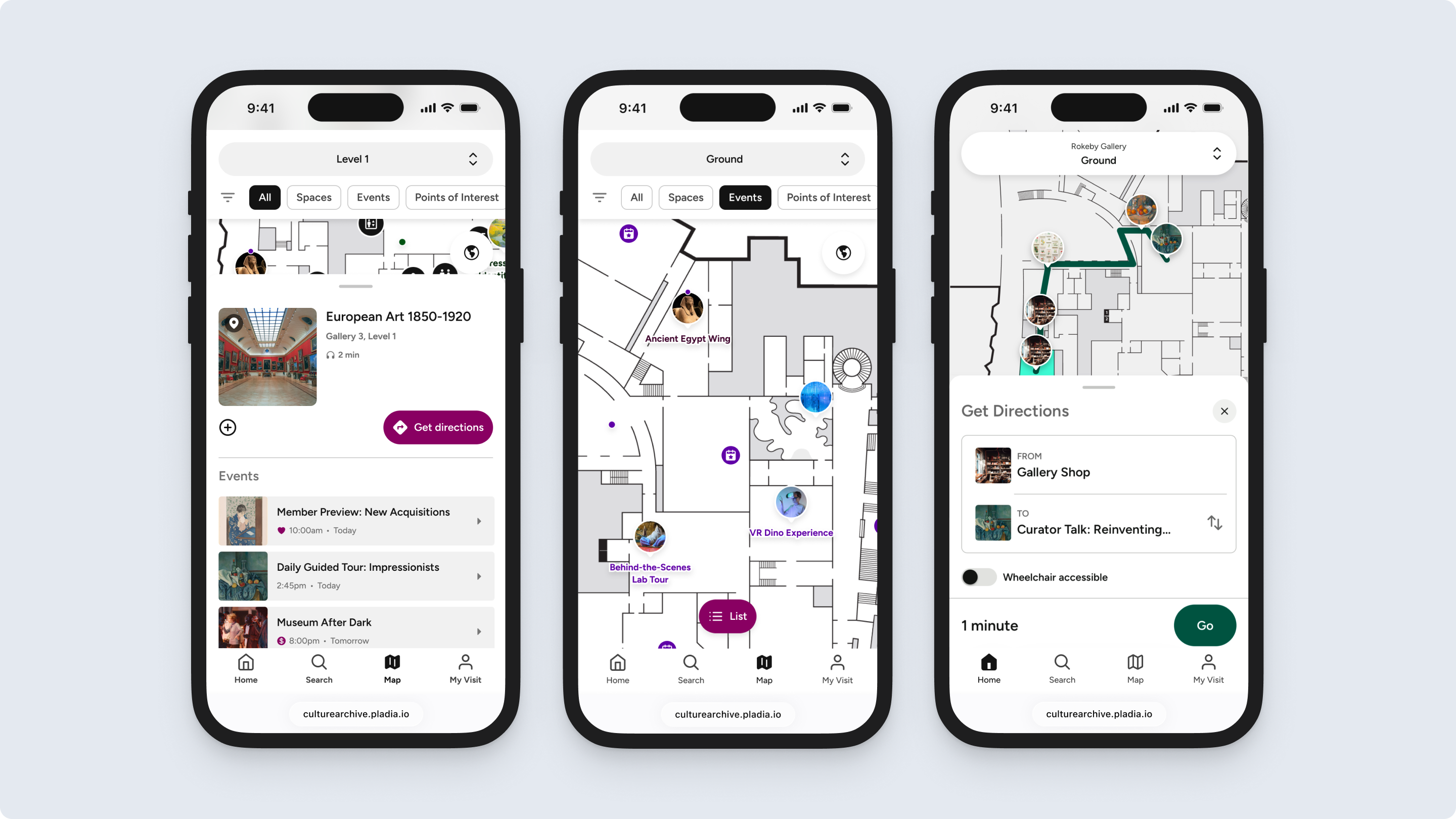
- What’s nearby?
- Can I attend?
- How do I get there?
The easier these questions are to answer, the easier it becomes for visitors to join guided tours, talks, workshops, and other programming.
When museums make events visible at the right time and in the right context, programming becomes something visitors naturally discover as part of their visit, not something they have to actively search for.
