Set-jetting, literary tourism, and the new cultural wanderer
How narrative-driven travel is reshaping visitor expectations

The arrival of the informed visitor
While visitor studies have long shown that audiences bring prior knowledge with them, most institutional interpretation is still operationally designed for the novice.
Increasingly, visitors cross the threshold having already formed deep emotional connections to the place they are entering. They have watched a television series set within your walls. They have read a novel inspired by your collection. They arrive not just curious, but invested, and sometimes more invested than your interpretive labels anticipate.
This is the arrival of the informed visitor.
At Pladia, we originally focused on the “entry experience” from the perspective of disorientation, the visitor who feels uncertain, overwhelmed, or intimidated by the formality of cultural institutions. The informed visitor presents the inverse challenge. They are confident, emotionally primed, and already carrying a narrative. The question is no longer how to orient them, but how to meet them.
From passive audience to cultural wanderer
Two overlapping forces are accelerating this shift: set-jetting and literary tourism.
Set-jetting, a term popularized by Expedia, describes travel motivated by film, television, and streaming media. Destinations once discovered through guidebooks are now encountered first through screens. In the U.S. alone, set-jetting is projected to become an $8 billion industry, with over 80% of Gen Z and Millennial travellers reporting that popular culture now influences where they go.
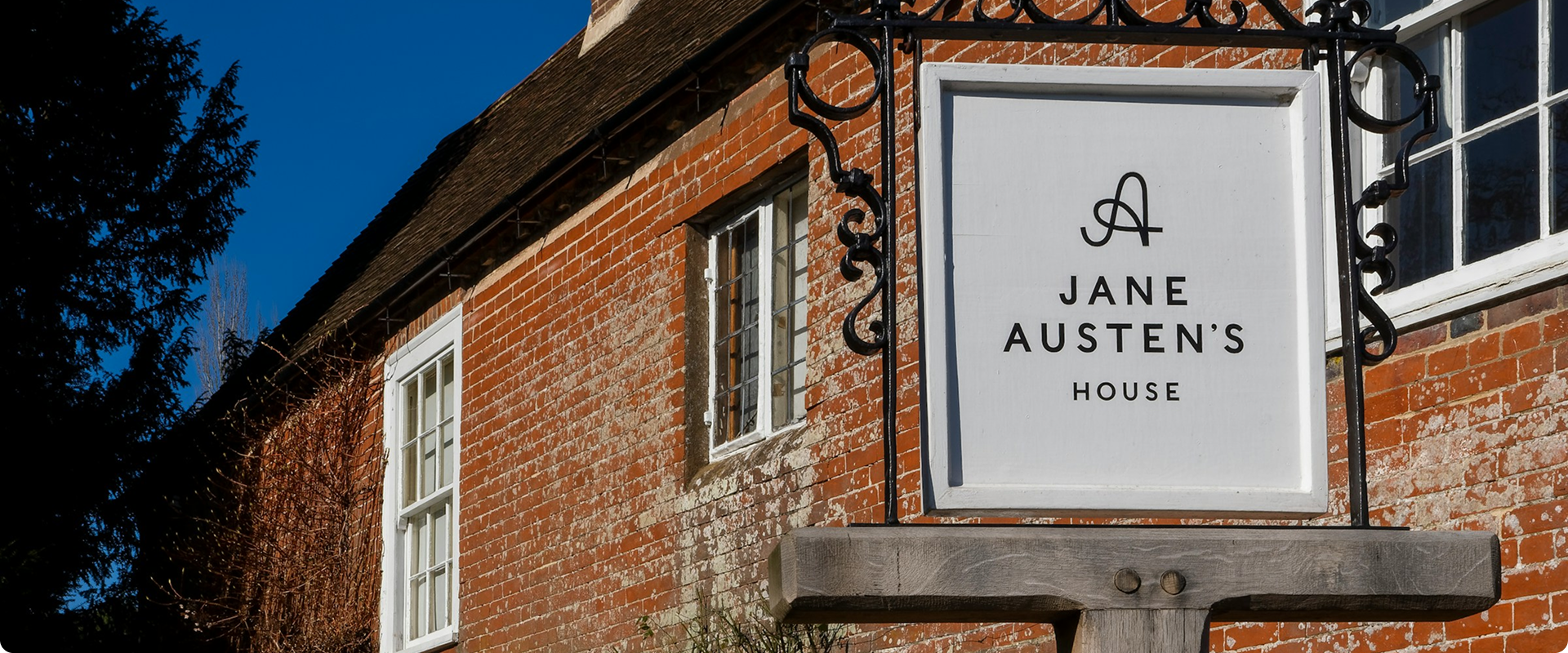
Literary tourism operates on a longer arc, but with similar intensity. Readers travel to author birthplaces, fictional settings, libraries, archives, literary museums, and cities shaped by narrative identity. At its core, literary tourism is about stepping into a story or into the life of the person who told it.
Both forms of tourism share a defining characteristic: the visitor arrives with meaning already attached.
This is not sightseeing. It is narrative-driven travel. Visitors are not discovering a place for the first time; they are confirming, extending, or interrogating a story they already know.
Why this matters now
These visitors are not a niche audience, nor a passing trend.
Even if informed visitors are not the majority, their presence changes the experience for everyone. They set expectations, shape interpretation norms, and influence institutional design.
They reflect durable shifts in how people engage with culture: a desire for meaning over consumption, emotional investment over information, and participation over passive learning. Literary tourism, in particular, tends to be year-round, high-value, and less extractive than mass tourism, qualities cities and institutions actively seek.
But the real shift is epistemological.
Visitors increasingly arrive with established frameworks for understanding what they are seeing. They are not asking, “What is this?” They are asking, “Is this the place I imagined and what didn’t the story show me?”
Museums, libraries, and heritage sites can anchor screen narratives in deeper historical context and capture visitors who might not otherwise engage with culture. Cities can extend dwell time, move visitors beyond “the one famous spot” and convert hype into lasting cultural value.
The interpretive challenge
This creates a fundamental tension for cultural institutions.
For decades, interpretation has been built on linear, didactic models: labels, audio guides, authoritative narratives flowing from curator to visitor. These models assume a novice audience and position the institution as the primary source of knowledge.
The informed visitor disrupts that hierarchy.
Some visitors now know specific narratives, fictional or historical, in extraordinary depth. Others arrive with expertise shaped by fandom, scholarship, or personal identity. Many are less interested in explanation than in discussion, contradiction, and nuance. They are not looking for the story; they are looking for what sits around it.
The challenge is no longer how to inform, but how to honour prior knowledge while deepening understanding, without surrendering curatorial integrity.
From authority to invitation
Meeting this moment does not mean abandoning expertise. It means repositioning it.
Institutions are uniquely placed to offer what media cannot: physical artefacts, material culture, historical contradiction, and the complexity often smoothed over in popular narratives. They can reveal the distance between representation and reality, and invite visitors into that space.
This might look like:
- Exploring what films and novels omitted or simplified
- Examining artistic license against historical record
- Surfacing contested interpretations
- Revealing the “rest of the story” beyond iconic moments
For the informed visitor, these tensions are not disappointing. They are the point.
Designing for layered knowledge
One way forward is tiered interpretation, not as hierarchy, but as choice.
Novice visitors still need orientation and foundational context. Enthusiasts benefit from deeper thematic routes and alternative paths. Experts and highly informed visitors want detail, contradiction, and interpretive risk, scholarly debates, unresolved questions, and moments of discovery that assume prior knowledge rather than explaining it away.
Digital storytelling and adaptive wayfinding make this possible at scale. Self-guided experiences can respond to stated interest levels, enabling visitors to move non-linearly, follow curiosity, and engage at their own depth without fragmenting the core narrative.
In practice, this means enabling institutions to publish multiple interpretive layers against the same physical space: introductory context for first-time visitors, thematic routes for enthusiasts, and optional deep dives for those who want primary sources, contradictions, or scholarly debate.
At Pladia, we think of this not as controlling the journey, but as designing invitations; frameworks for modular interpretation, that respect autonomy while supporting meaning-making.
What this means for institutions
For museum and cultural leaders, the implications are strategic.
Set-jetting and literary tourism represent a structural shift in visitor expectations. Success will be measured not only by attendance, but by depth of engagement, dwell time, and emotional resonance. Institutions will need flexible content systems that can evolve as narratives change and risk management strategies that address sudden visitor surges without flattening experience.
For curatorial and content teams, this requires a redesign of interpretation itself: layered content, expert tracks, and active engagement with the media shaping visitor expectations. Understanding the “canon” your audience arrives with is now part of interpretive practice.
For visitor experience teams, the work extends beyond the gallery. The full journey; before, during, and after the visit, must be mapped, integrated, and responsive. Digital and physical experiences can no longer be treated as separate domains.
The invitation
The cultural wanderer of 2026 does not need institutions to tell them the story. They already know it.
What they need is an invitation to complicate it, deepen it, and encounter it in the presence of the real. The institutions that thrive will honour the emotional journeys visitors bring through the door.
The cultural wanderers are coming. Are you ready to welcome them?
