
PA systems vs app-based audio for outdoor events
Are speaker systems still the best way to deliver an audio experience at outdoor events?

Outdoor events are often designed around PA systems as the primary way to deliver audio. Speakers are positioned, sound zones are planned, and audiences gather where the audio is strongest.
This approach works, but it also defines where people can comfortably stand, how crowded areas become, and who can access the experience. As venues grow larger and more open, these constraints become more visible.
Two ways to deliver sound
PA systems distribute sound through a limited number of physical points. Speakers must be installed, powered, and tuned to suit the venue. Sound is strongest close to those speakers and weakens with distance (amongst other obstacles).
Event Sync takes a different approach. Audio is delivered directly to each visitor’s device, removing the need for centralised speakers and allowing sound to be experienced consistently across a much larger area.
These two models lead to very different outcomes for logistics, space usage, and accessibility.
Visualising the difference
Before: PA-based audio
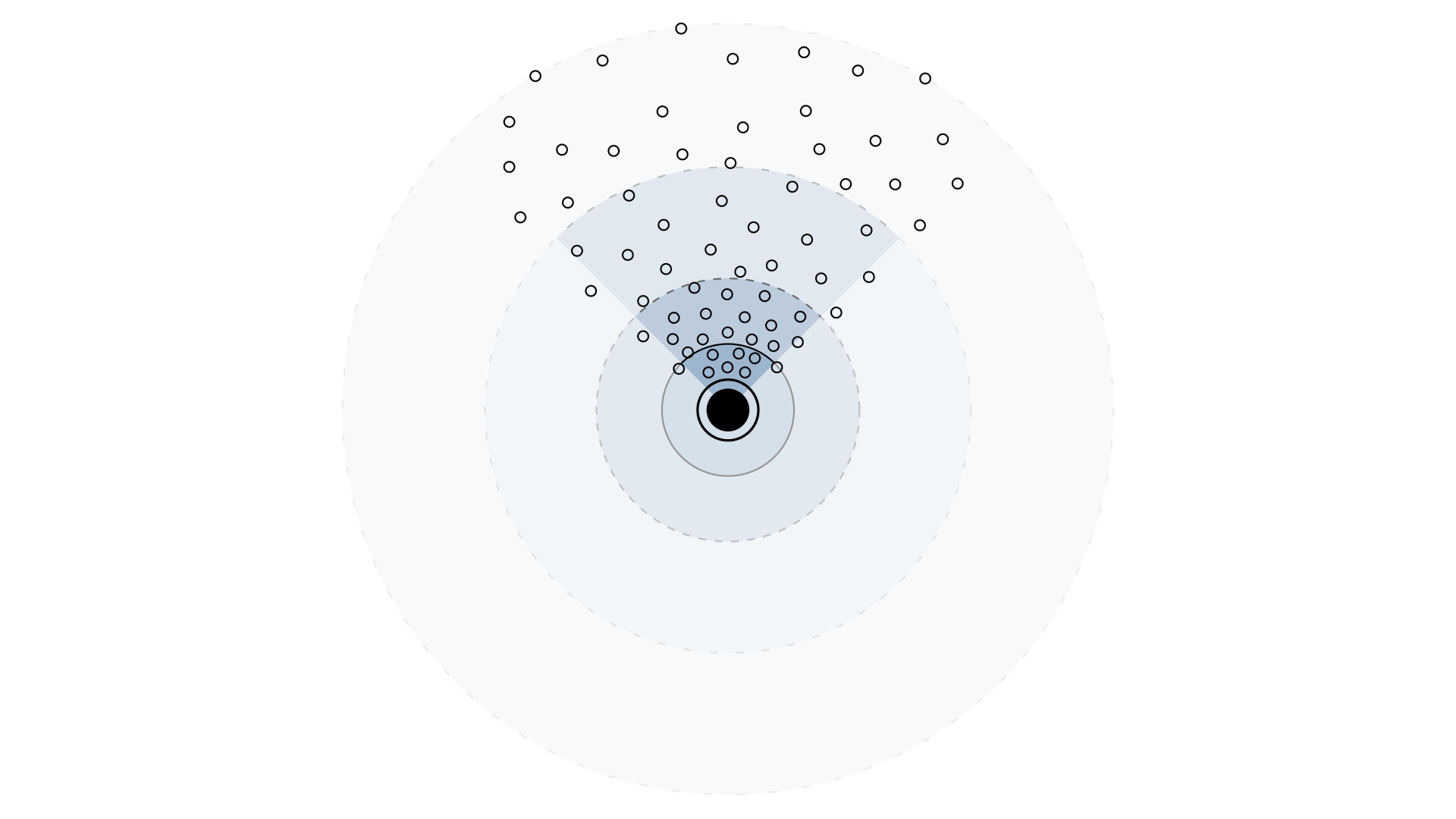
In a large outdoor venue, a PA system is installed in one section of the site. Most visitors gather near the speakers in order to hear the audio clearly, or leave the area if it feels too crowded or uncomfortable.
This creates a narrow listening zone with high noise levels and dense crowding. Areas further away remain part of the venue but disconnected from the audio experience. The sound system, rather than the layout of the site, determines how people move and where participation feels possible.
After: distributed personal audio

With Event Sync, audio is delivered directly to each visitor’s device. A central PA system is no longer required.
Audience members can spread out across the venue while still hearing the same synchronised content. Visitors choose where to stand or sit based on comfort, visibility, or access needs instead of speaker placement. The listening area expands from a single cluster to the full footprint of the site.
Logistics and infrastructure
PA systems require physical installation, power, sound engineering, and ongoing management. In outdoor environments, this often involves transport, setup time, and planning around weather and power access. Fixed sound zones must also be carefully designed to avoid uneven coverage or interference.
Event Sync reduces the amount of physical infrastructure needed to deliver audio. There are no speaker towers to position and no single location that determines sound quality for the entire audience. Organisers can design the experience around the space itself rather than around sound equipment.
Creating a more accessible listening experience
With PA systems, visitors who want to hear clearly must move into crowded and often loud zones. These areas can be difficult for people who are sensitive to noise and physically hard to reach for visitors with mobility needs.
When audio is delivered through personal devices, these constraints are reduced. Quieter and more accessible parts of the venue remain connected to the experience through the same audio content.
Because audio is delivered through each visitor’s own device, people who use Bluetooth-enabled hearing aids or hearing-aid streaming accessories can listen through their existing assistive technology. This removes the need for special equipment or separate listening zones.
Good design is inclusive by default. With Event Sync you’re able to meet your accessibility objectives as a result of distribution rather than a separate initiative.
A shift in how audio shapes events
The difference between PA systems and personal audio is not just technical. It changes how people occupy and move through a venue.
- With PA systems, sound defines where participation is possible.
- With Event Sync, participation is no longer tied to speaker proximity.
By moving from fixed speakers to distributed personal audio, events can expand the usable listening area, reduce reliance on physical infrastructure, and ensure that high-quality audio production is experienced clearly and consistently across the venue.
Audio becomes part of the environment rather than a constraint placed upon it.
